
2026-09-19 · Dave Hendricks
Sewer Backup vs Drain Clog: What Is the Difference?
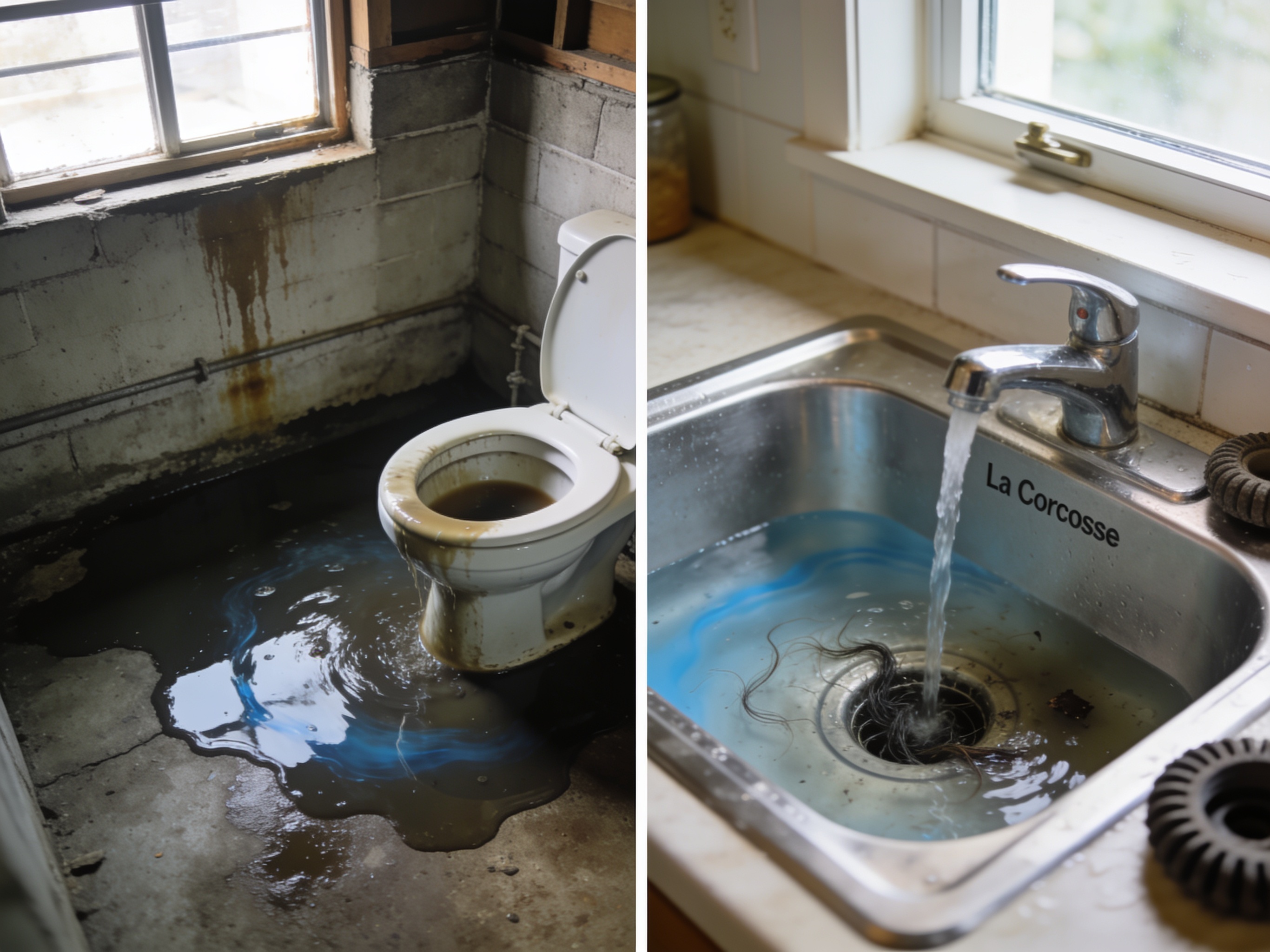
A sewer backup sends wastewater from the main line into multiple fixtures throughout the home while a drain clog stays isolated to one line and usually clears with a plunger or snake. In La Crosse the difference shows up fast during spring thaws or after heavy rain when older clay pipes in North Side and South Side neighborhoods crack or fill with roots.
Signs That Point to a Main Line Problem
Multiple fixtures backing up at once, such as a toilet overflowing while the shower drains slowly, signal a sewer backup rather than a localized clog. Homeowners in Downtown La Crosse and near Riverside Park often notice gurgling sounds from floor drains first because many 1920s–1950s homes share one four-inch clay main that runs under the basement slab. Cold winters freeze ground around those lines and expand small cracks, letting groundwater and roots enter; the same pipes then cannot handle summer storm surges. A single clogged bathtub rarely produces sewage odors in the laundry room two floors away, but a main line failure does.
Why La Crosse Weather and Housing Stock Matter
La Crosse County sits in a humid continental climate where winter lows regularly drop below zero and summer humidity stays high. Those swings stress cast-iron and clay lines installed before 1970 in areas like Powell-Poage-Hamilton and Logan Northside. When snow melts fast or rain falls for days, saturated soil pushes water and debris into any fracture. A drain clog caused by grease or hair stays upstream of the trap and never reaches the city main, but a sewer backup can carry E. coli from the entire block into basements near Grandad Bluff or the La Crosse Center. French Island and West Salem properties built on clay soils see the same pattern because water lingers longer around shallow mains.
Steps to Confirm Which Problem You Have
Turn off water at the main valve and watch whether every drain in the house is affected; if only one fixture stops, it is likely a clog. Check cleanouts in the basement—many La Crosse homes have them near the water heater. If water rises from the cleanout, the issue sits downstream in the main line. Avoid using plungers on multiple fixtures at once because that can force sewage farther into the system. Residents in Weigent-Hogan and Washburn often call after noticing the same slow drain in both the kitchen and an upstairs bath, a pattern that almost always traces to the shared four-inch line rather than separate clogs.
When Professional Extraction Becomes Necessary
Once wastewater crosses the foundation wall, porous concrete and wood framing in older La Crosse basements absorb it quickly. Removing standing water and contaminated carpet requires equipment that reaches hidden moisture behind baseboards and under subfloors. Basement Sewage Backup Cleanup crews use air movers and dehumidifiers sized for the square footage typical of two-story homes near the Mississippi. Delaying extraction lets bacteria grow in the 70–80 percent humidity that follows warm summer rains. What to Do Immediately After a Basement Sewage Backup outlines the first hour actions that limit structural damage before mold sets in.
How Nearby Cities Compare
Eau Claire and Winona share similar cold winters and aging infrastructure, yet La Crosse sees more backups in South Side neighborhoods because the terrain slopes toward the river and storm sewers surcharge faster. Properties along the bluff line experience fewer issues than those on flat ground near the La Crosse Center. Knowing the difference between a clog and a backup helps owners decide whether a $150 snake call will solve the problem or whether full extraction and sanitization are required to protect the home.