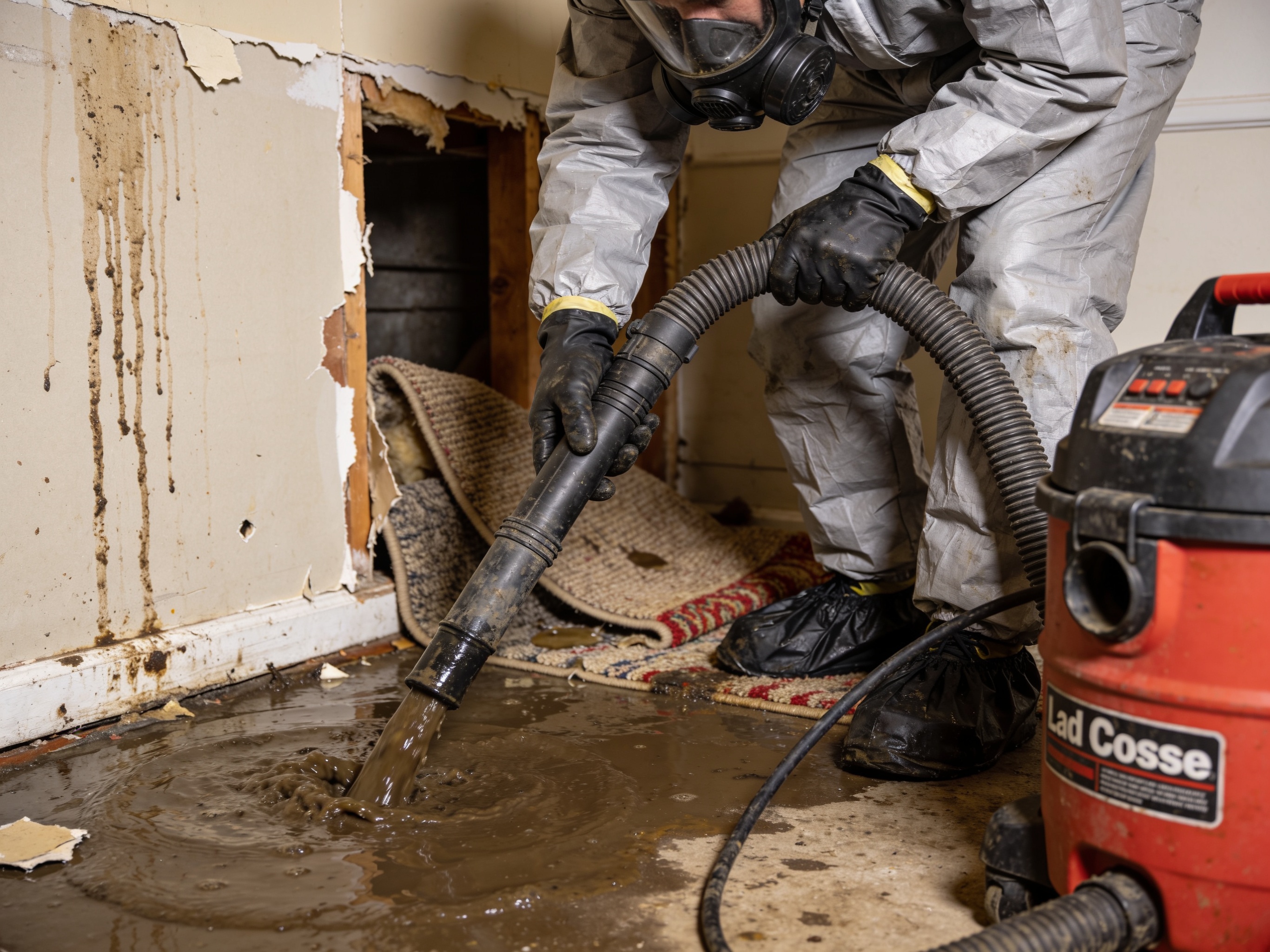
La Crosse homes built before 1960 on the North Side and near Riverside Park often have plaster walls and hardwood subfloors that absorb sewage quickly. Removing these materials requires cutting at least 18 inches above the water line and bagging everything in biohazard liners before transport to approved disposal sites outside the county. Cold winter temperatures below freezing can push backups from frozen lines under Grandad Bluff neighborhoods, making access under crawl spaces more difficult and increasing the risk of hidden contamination in insulation.
The humid continental climate brings warm summers that accelerate bacterial growth in saturated drywall and carpet padding along the South Side near the Mississippi. Technicians must separate non-porous items like appliances for possible cleaning while discarding all porous contents. Local soil conditions with high clay content hold moisture longer after heavy rain, so extraction crews check for secondary mold growth even weeks after the initial backup event from Eau Claire or Winona storm patterns.
Properties around the La Crosse Center and Downtown face additional challenges from combined sewer systems that overflow during spring thaws. Removal crews document every layer removed to meet Wisconsin Department of Natural Resources guidelines for contaminated waste tracking. Edge cases include multi-story buildings where sewage migrates through floor joists, requiring ceiling demolition on lower levels to prevent recontamination in adjacent units.
Technician insight
In La Crosse, the thing that catches most people out with Contaminated Material Removal After Sewage Backup is how clay-heavy soils around the South Side hold water long after a backup from river-influenced drainage, so crews often find hidden saturation in subfloors weeks later that homeowners miss during cold winter thaws.
Downtown La Crosse Backup After Spring Thaw
A homeowner near the La Crosse Center reported sewage entering the basement after a March thaw. Crews found water had wicked into plaster walls and carpet padding on the first floor. They removed all contaminated drywall and flooring, bagged materials for disposal, and verified no remaining moisture in the joists before leaving the site.
Contaminated Material Removal After Sewage Backup Services We Offer
✓Carpet and Padding Removal
Complete extraction and bagging of saturated carpet and underlayment from affected rooms to stop bacteria spread in La Crosse homes.
✓Drywall and Insulation Extraction
Cutting and disposal of contaminated drywall and fiberglass insulation up to 18 inches above water lines in older North Side properties.
✓Hardwood Subfloor Disposal
Removal of sewage-soaked subfloor sections in pre-1960 La Crosse houses where moisture has penetrated the wood layers.
✓Furniture and Appliance Assessment
Evaluation and tagging of contaminated furniture and appliances for safe disposal versus professional cleaning in South Side residences.
✓Crawl Space Material Removal
Extraction of saturated insulation and debris from crawl spaces common under homes near Grandad Bluff after winter pipe bursts.
Contaminated Material Removal After Sewage Backup Cost in La Crosse, WI
| Service | Typical Range | What Affects It |
|---|---|---|
| Single room carpet and drywall removal | $900–$1,600 | Higher in winter when frozen lines affect access under North Side homes |
| Multi-room extraction including subfloor | $2,200–$3,800 | Varies with clay soil moisture retention on South Side properties |
| Crawl space insulation and debris removal | $1,100–$2,000 | Common after spring thaws near Riverside Park |
| Appliance and furniture disposal coordination | $350–$650 | Depends on number of items and transport distance |
Ranges are typical for La Crosse, WI and confirmed with an exact written quote before any work starts.
How it works
- 1
Site Assessment
Technicians inspect all affected rooms in the La Crosse property and identify porous materials that must be removed.
- 2
Containment Setup
Plastic barriers and negative air machines isolate the work area to prevent cross-contamination to unaffected spaces.
- 3
Material Extraction
Crew removes and double-bags contaminated drywall, carpet, and insulation for transport to approved disposal facilities.
- 4
Final Verification
Property is checked for remaining moisture and hidden contamination before barriers are taken down.
Pricing
Costs depend on square footage affected, number of stories, and whether crawl spaces or basements require access in older La Crosse homes.