
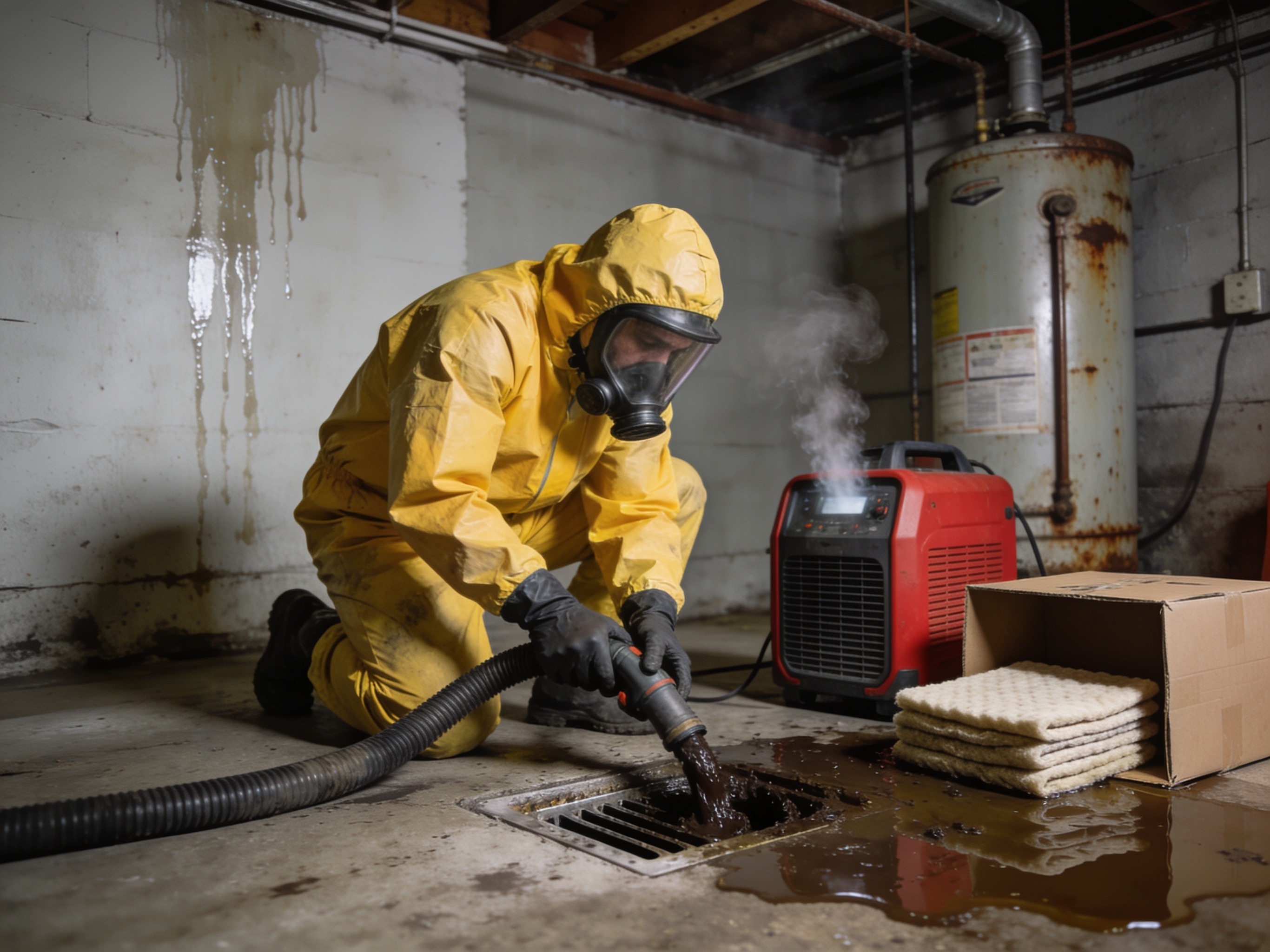
La Crosse homes built before 1960 in the North Side and Downtown often have clay tile or cast-iron sewer lines that crack from repeated freeze-thaw cycles. When heavy spring snowmelt or summer storms hit, these lines back up into basements faster than newer PVC systems. Crews must remove saturated insulation and drywall quickly because the humid continental climate keeps moisture trapped for weeks without proper dehumidification.
Near Grandad Bluff and along the river corridor, high water tables and poor grading around older foundations push groundwater into sump pits already overloaded by sewage. Technicians test for hidden contamination under concrete slabs and behind finished walls, then dispose of affected material according to La Crosse County health rules rather than simply rinsing surfaces.
South Side properties close to Riverside Park and the La Crosse Center frequently see backups during peak tourist weekends when city lines are stressed. In these cases, crews isolate the affected area with negative air machines to prevent cross-contamination into living spaces above, then run targeted drying focused on the limestone and brick foundations common in that neighborhood.
Work in Eau Claire or Winona referrals sometimes crosses into La Crosse County; the same cold-winter pipe-burst pattern appears, but local soil here holds more moisture, requiring longer drying times and extra antimicrobial steps to stop mold on joists.
Technician insight
In La Crosse, the thing that catches most people out with Basement Sewage Backup Cleanup is how quickly sewage migrates behind plaster walls in pre-war North Side homes once the ground thaws; the clay soil here holds water against foundations longer than the sandy soils near Winona, so drying takes an extra two to three days if you skip the slab-edge checks.
South Side Backup After Spring Melt
A homeowner near Riverside Park called after snowmelt overwhelmed an aging clay line and sent wastewater into a finished basement. Crews found sewage had wicked six inches up drywall and under the subfloor. They removed the lower four feet of wall, extracted water, sanitized framing, and ran drying equipment for four days until readings dropped below 12 percent.
Basement Sewage Backup Cleanup Services We Offer
✓Emergency Sewage Extraction
Rapid removal of standing wastewater from basements in older La Crosse homes before it soaks into floor joists or travels to adjacent rooms.
✓Contaminated Drywall and Insulation Removal
Cutting out and disposing of saturated materials in North Side and Downtown properties where pre-1960 walls hide sewage behind plaster and lath.
✓Basement Odor Elimination
Neutralizing hydrogen sulfide and bacterial smells that linger in South Side homes after backups near the river corridor.
✓Structural Drying After Sewage
Targeted air movers and dehumidifiers calibrated for La Crosse's humid summers to dry brick and limestone foundations without promoting mold.
✓Sump Pit Sanitation and Repair
Cleaning and resetting sump systems that fail during spring melt in homes around Grandad Bluff and Riverside Park.
Basement Sewage Backup Cleanup Cost in La Crosse, WI
| Service | Typical Range | What Affects It |
|---|---|---|
| Small basement extraction only | $450–$850 | Limited to unfinished spaces under 300 sq ft with no wall removal. |
| Full basement cleanup with material removal | $1,200–$2,800 | Includes drywall cuts, disposal, and drying in older North Side homes. |
| Odor and sanitation add-on | $300–$600 | Extra equipment for persistent smells after river-area backups. |
| Post-winter freeze backup response | $900–$1,900 | Covers jobs triggered by frozen lines common in La Crosse winters. |
Ranges are typical for La Crosse, WI and confirmed with an exact written quote before any work starts.
How it works
- 1
Site Assessment
Technicians inspect the basement, trace the backup source, and note affected materials in homes built on La Crosse's clay-heavy soil.
- 2
Wastewater Removal
Pumps and vacuums extract standing sewage while containing runoff to prevent further spread into neighboring properties.
- 3
Contaminated Material Removal
Cut and bag drywall, carpet, and insulation for proper county disposal, then clean exposed framing.
- 4
Drying And Sanitation
Equipment dries the space and applies EPA-registered treatments suited to the area's seasonal humidity swings.
- 5
Final Clearance
Moisture readings and odor checks confirm the basement is safe before homeowners return belongings.
Pricing
Pricing varies by water volume, affected square footage, and whether finished walls must be opened. Upfront written quotes are provided after the initial assessment.