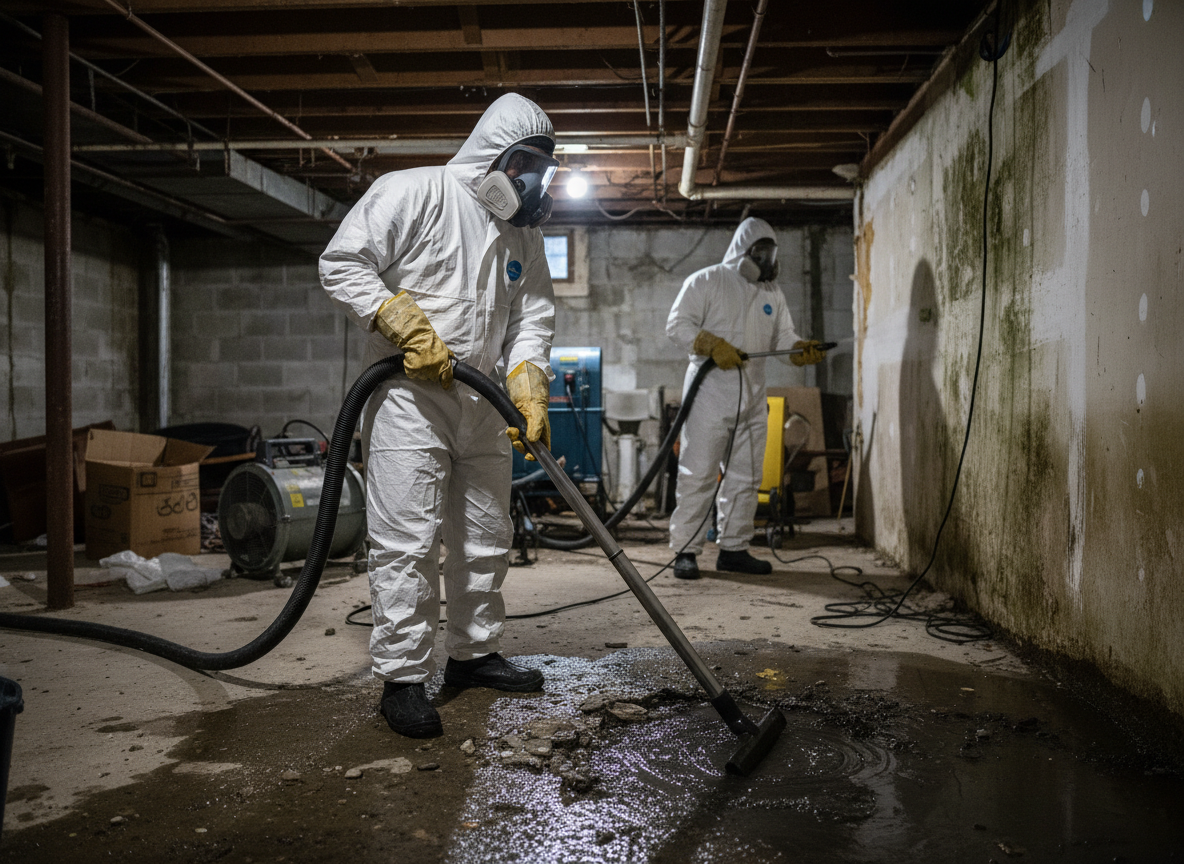
La Crosse homes built before 1960 often have clay or cast iron lines that crack under freeze-thaw cycles common in the humid continental climate. When a main line backs up, black water reaches finished basements in North Side neighborhoods near Grandad Bluff faster than in newer South Side construction. We extract standing effluent, remove saturated subflooring, and apply hospital-grade disinfectants rated for Category 3 water to prevent mold in the warm summer months that follow.
Riverside Park and properties near the La Crosse Center sit on low-lying ground where spring melt and heavy rain push groundwater into aging sewers. This creates recurring backups that carry river silt and organic matter deep into wall cavities. Our crews isolate affected zones with negative air machines, cut out contaminated drywall up to the moisture line, and treat joists with antimicrobial solutions before drying to 12 percent or lower moisture content.
Travel between La Crosse and nearby Winona or Eau Claire shows the same pattern: older downtown stock suffers more from root intrusion and pipe offset than newer builds. We document every step with photos and moisture readings so homeowners can see exactly which materials must be removed to meet Wisconsin health code standards for habitable space.
After extraction we run industrial dehumidifiers and air movers for 48 to 72 hours, checking readings twice daily. This prevents hidden moisture behind baseboards that would otherwise cause odors weeks later when summer humidity rises.
Technician insight
In La Crosse the thing that catches most people out with Black Water Cleanup & Sanitization is how fast cold winters freeze shallow sewer lines on the North Side, then a sudden thaw sends effluent under finished floors before homeowners notice; older clay pipes near Vine Street and the river simply cannot handle the volume the way newer PVC can.
Downtown Backup After Spring Thaw
A 1920s home two blocks from Riverside Park experienced a main line backup when melting snow overwhelmed the clay sewer. We found effluent had wicked six inches up into plaster walls on the lower level. After extraction and removal of saturated plaster and subfloor, we treated the joists and ran drying equipment for three days until readings dropped below 12 percent.
Black Water Cleanup & Sanitization Services We Offer
✓Basement Sewage Extraction
Removes standing black water and solids from finished and unfinished basements in older La Crosse homes where gravity drains often fail.
✓Contaminated Drywall Removal
Cuts and disposes of saturated wallboard up to the moisture line, preventing hidden mold growth in cold-winter homes near Riverside Park.
✓Subfloor and Joist Sanitization
Treats exposed wood framing with EPA-registered antimicrobials after sewage contact in North Side and Downtown properties.
✓Carpet and Pad Disposal
Removes and properly disposes of flooded carpet and padding that cannot be salvaged after Category 3 water intrusion.
✓Appliance and Fixture Cleaning
Cleans and sanitizes toilets, sinks, and laundry equipment affected by backup from main line failures common in pre-1970 La Crosse housing.
✓Post-Cleanup Moisture Verification
Provides documented moisture meter readings to confirm drying targets before reconstruction begins on South Side or Downtown jobs.
Black Water Cleanup & Sanitization Cost in La Crosse, WI
| Service | Typical Range | What Affects It |
|---|---|---|
| Initial Assessment And Containment | $250–$450 | Higher when alley access or multi-story homes near Grandad Bluff limit equipment placement. |
| Sewage Extraction Per 100 Sq Ft | $400–$700 | Varies with depth of standing water and presence of finished flooring in older North Side basements. |
| Drywall And Insulation Removal | $300–$600 | Depends on linear feet of wall affected and whether plaster or drywall is present. |
| Full Sanitization And Drying | $500–$900 | Increases with summer humidity or when multiple rooms require equipment in South Side properties. |
Ranges are typical for La Crosse, WI and confirmed with an exact written quote before any work starts.
How it works
- 1
Site Assessment
Inspect all affected rooms, map moisture migration, and note pipe age and access points typical of La Crosse housing stock.
- 2
Containment And Extraction
Set up barriers and negative air, then remove standing water and solids using truck-mounted equipment suited for narrow downtown alleys.
- 3
Material Removal
Cut out contaminated drywall, carpet, and insulation while protecting unaffected areas from cross-contamination.
- 4
Sanitization And Drying
Apply disinfectants, then run drying equipment with daily readings until moisture levels meet restoration standards.
- 5
Final Verification
Document dryness and provide clearance report before any reconstruction work begins.
Pricing
Upfront quotes after on-site inspection at your La Crosse address; final cost depends on square footage, depth of contamination, and access in older homes.