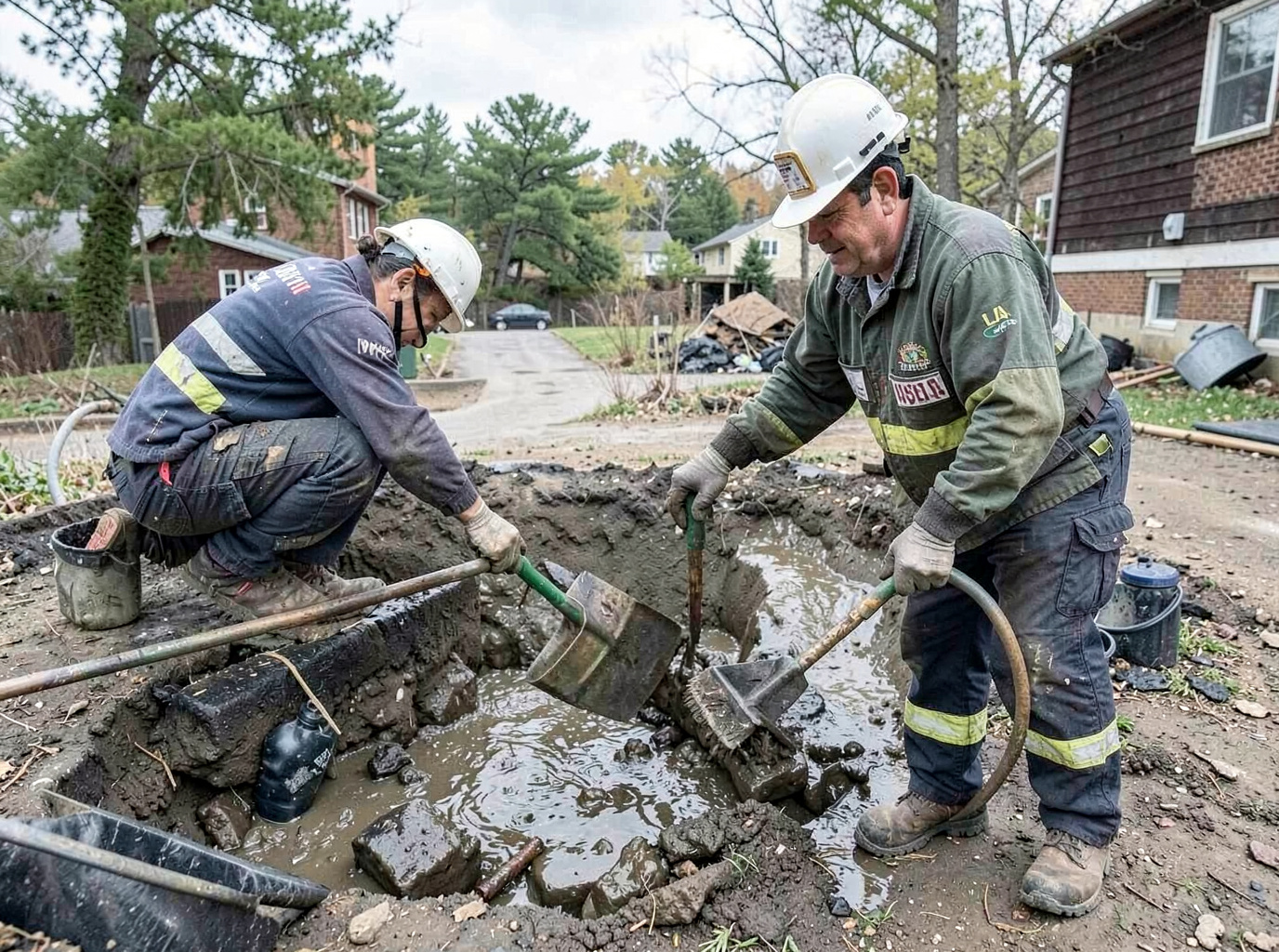
La Crosse homes built before 1960, especially those on the South Side and near Riverside Park, often have clay or cast-iron laterals that crack under freeze-thaw cycles common in the humid continental climate. Recurring backups usually trace to root intrusion from mature trees or offset joints that allow groundwater infiltration after heavy spring rains or rapid snowmelt. Technicians start by mapping the line from the cleanout at 333 Vine St addresses outward, then isolate the failure point before any extraction begins to avoid pushing waste into living spaces.
Winter temperatures dropping below zero can freeze shallow lines on the North Side where frost depth reaches four feet, while summer humidity keeps basements damp and encourages bacterial regrowth if standing water remains. Combined sewers in older Downtown blocks overflow during peak flow events, sending effluent back through floor drains. Proper recurring cleanup requires removing contaminated porous materials such as subfloor insulation and wallboard up to the flood line, followed by negative-air drying and antimicrobial application rated for sewage pathogens.
After extraction, crews hydro-jet the line at 3,500–4,000 psi to clear grease and roots, then run a camera to confirm no offsets remain. In La Crosse County terrain that slopes toward the river, backflow preventers must be installed at the correct elevation to stop reverse flow from municipal mains. Homeowners in Winona or Eau Claire facing similar issues often discover that skipping the camera step leaves small fractures that reopen within one season.
Technician insight
In La Crosse, the thing that catches most people out with Recurring Sewage Backup Cleanup is the old combined sewer mains on the South Side that surcharge during spring melts; homeowners keep clearing the line without addressing the municipal back-pressure, so backups return the next thaw.
South Side Basement Repeat Backup
A 1928 home near Riverside Park experienced backups after every heavy rain. Camera work revealed a cracked clay lateral and offset joint allowing groundwater entry. Crews extracted waste, lined the line, and installed a backflow valve at the correct elevation. No further incidents occurred through the following winter and spring runoff.
Recurring Sewage Backup Cleanup Services We Offer
✓Root Intrusion Removal
Locate and cut tree roots infiltrating clay laterals common in South Side yards, then apply root inhibitors to reduce regrowth that causes repeat backups.
✓Sewer Camera Inspection
Run a high-resolution camera from the exterior cleanout to identify offsets, cracks, and bellies in lines serving North Side and Downtown properties before any cleaning starts.
✓Hydro Jetting Service
Clear recurring grease and debris blockages at pressures suited to older La Crosse pipes without damaging fragile joints near Grandad Bluff slopes.
✓Trenchless Pipe Lining
Install epoxy liners inside existing lines to seal cracks caused by freeze-thaw cycles without excavating yards in established North Side neighborhoods.
✓Backflow Valve Installation
Fit code-compliant backflow devices at the correct elevation to protect basements from river-adjacent sewer surges during heavy runoff events.
Recurring Sewage Backup Cleanup Cost in La Crosse, WI
| Service | Typical Range | What Affects It |
|---|---|---|
| Camera Inspection and Assessment | $225–$375 | Higher when access is limited or multiple laterals require checking |
| Hydro Jetting and Extraction | $650–$1,400 | Varies with volume of waste and whether floor drains are involved |
| Trenchless Lining Repair | $1,800–$3,200 | Depends on linear footage and number of bends in older South Side lines |
| Backflow Valve Installation | $450–$750 | Includes excavation and permit coordination for La Crosse properties |
Ranges are typical for La Crosse, WI and confirmed with an exact written quote before any work starts.
How it works
- 1
Site Assessment
Technicians inspect the property, locate the cleanout, and run a camera to map the failure points affecting the specific La Crosse address.
- 2
Containment and Extraction
Isolate affected areas, remove standing sewage, and extract contaminated water to prevent migration into unaffected rooms.
- 3
Line Clearing and Repair
Hydro-jet the sewer lateral and perform targeted lining or spot repairs on cracked sections identified during inspection.
- 4
Sanitization and Drying
Apply EPA-registered disinfectants, remove porous materials, and use commercial drying equipment until moisture readings reach safe levels.
- 5
Prevention Planning
Recommend and install backflow devices or sump pump upgrades based on the home's age and location relative to La Crosse terrain.
Pricing
Costs depend on line length, depth of contamination, and whether trenchless repairs are needed; upfront quotes provided after inspection.