
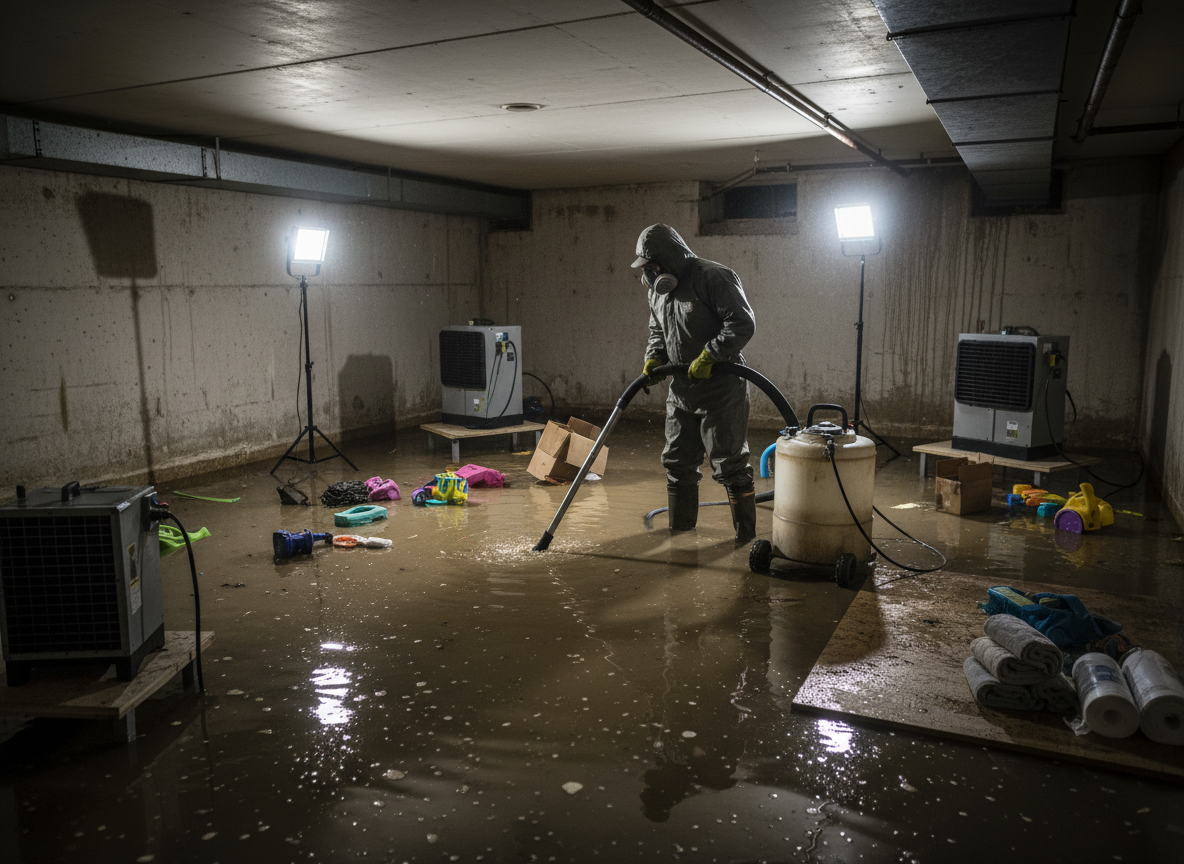
La Crosse's humid continental climate brings intense summer downpours that overwhelm combined sewer systems, especially in pre-1950 housing stock common on the North Side and around Riverside Park. Older clay tile lines crack under freeze-thaw cycles and send rainwater mixed with sewage into basements near Grandad Bluff slopes where water runs fast downhill. Technicians must account for high water tables along the Mississippi and the way warm summer humidity slows drying inside stone foundations.
Work in South Side bungalows often involves navigating narrow crawl spaces and dealing with contaminated drywall that wicks moisture up to the baseboard level. After heavy rain events, crews extract standing water within hours to prevent mold in the area's variable summer temperatures. Sanitation requires EPA-registered disinfectants rated for porous materials because many La Crosse homes still have original oak flooring that can trap odors if not treated properly.
Edge cases appear near the La Crosse Center where commercial runoff combines with residential lines, raising contamination levels. Crews test for hidden voids behind plaster walls common in Downtown properties and document conditions before any removal to satisfy local health department expectations. Winter backups are rarer but occur when spring melts hit frozen ground and force water back through floor drains in South Side basements.
Technician insight
In La Crosse, the thing that catches most people out with Sewage Backup After Heavy Rain Cleanup is how quickly water travels through the clay-heavy soil on the North Side after a bluff runoff event, pushing sewage under slab foundations that look dry on the surface until we open the floor.
South Side Bungalow After July Storm
Heavy rain sent sewage through the floor drain of a 1920s South Side home. We found water had wicked into plaster walls and under original hardwood. Extraction and targeted removal of damaged sections stopped further odor issues, and the homeowner could resume use of the space within four days.
Sewage Backup After Heavy Rain Cleanup Services We Offer
✓Basement Extraction After Storm Overflows
Removes standing sewage water from La Crosse basements within hours of heavy rain to limit damage to older foundation materials.
✓Sewer Line Backup Decontamination
Cleans and disinfects affected floor drains and lines in North Side and Downtown homes where clay pipes meet modern storm surges.
✓Contaminated Drywall and Flooring Removal
Cuts and disposes of water-damaged drywall and subfloors in South Side properties to stop hidden mold growth after rain events.
✓Odor Neutralization for Porous Surfaces
Treats oak floors and plaster walls typical in La Crosse homes to eliminate sewage smells that linger in humid summer air.
✓Crawl Space Sanitation Post-Rain
Addresses sewage intrusion in low crawl spaces common near Riverside Park and Grandad Bluff runoff zones.
Sewage Backup After Heavy Rain Cleanup Cost in La Crosse, WI
| Service | Typical Range | What Affects It |
|---|---|---|
| Basement extraction and basic sanitation | $900–$1800 | Higher when multiple rooms or crawl spaces are involved |
| Drywall and flooring removal | $600–$1400 | Depends on linear feet and material type in older homes |
| Odor neutralization treatment | $350–$650 | Required for oak and plaster surfaces common Downtown |
Ranges are typical for La Crosse, WI and confirmed with an exact written quote before any work starts.
How it works
- 1
On-Site Assessment
Technician inspects affected areas in the specific neighborhood, checks for hidden moisture behind walls, and notes access constraints in older La Crosse homes.
- 2
Water Extraction
Pumps and vacuums remove standing sewage while protecting unaffected rooms and documenting conditions for the homeowner.
- 3
Cleaning And Disinfection
Applies targeted treatments to floors, walls, and drains, focusing on porous materials found in pre-war housing stock.
- 4
Drying And Final Check
Uses dehumidifiers and air movers, then verifies moisture levels before any reconstruction work begins.
Pricing
Upfront quotes after inspection; cost driven by square footage, depth of contamination, and access in older homes.